
The Future of Cryptocurrency Market 2026 and Digital Finance Trends
The global financial system is changing faster than ever before. Cryptocurrency market 2026 is expected to grow rapidly as Bitcoin, Ethereum, blockchain technology, and decentralized finance continue shaping the future of digital finance. But while opportunities continue to grow, the cryptocurrency market has also become more complex, volatile, and unpredictable. Every single day, investors wake up to breaking headlines: Bitcoin price fluctuations Ethereum network upgrades AI-powered trading systems Global regulations Whale movements Stablecoin controversies Massive liquidations Institutional investments The question many people are asking today is simple: Where is the cryptocurrency market heading in 2026? This article explores the future of finance, analyzes the current state of the cryptocurrency market, and explains the emerging global trends shaping digital assets in 2026. The Rise of Cryptocurrency in the Modern Economy Cryptocurrency is no longer a small corner of the internet. It has evolved into a multi-trillion-dollar industry influencing banking, investing, international payments, gaming, artificial intelligence, and even politics. Bitcoin remains the leader of the market, but the ecosystem around it has expanded dramatically. Ethereum continues to dominate decentralized finance, while networks like Solana, XRP, Avalanche, and emerging AI-based tokens are attracting global attention. One major reason for crypto’s rapid growth is distrust in traditional financial systems. Inflation, banking instability, currency devaluation, and rising global debt have pushed many investors toward decentralized digital assets. Unlike traditional banking systems, cryptocurrencies operate on blockchain technology, allowing transactions to happen without centralized control. This shift has created a new generation of investors who view cryptocurrency not just as speculation, but as a long-term financial revolution. Bitcoin’s Role in the 2026 Financial Market Bitcoin continues to dominate headlines in 2026. Often referred to as “digital gold,” Bitcoin has become a major store of value for institutions, hedge funds, and retail investors alike. Several factors continue to influence Bitcoin’s price: Institutional adoption ETF investments Global inflation concerns Interest rate decisions Government regulations Market sentiment In recent months, Bitcoin has shown strong resilience despite market volatility. Large companies and financial institutions continue accumulating BTC as part of their long-term strategy. Many analysts believe Bitcoin is transitioning from a speculative asset into a globally recognized financial instrument. However, volatility remains one of Bitcoin’s defining characteristics. Prices can rise rapidly during bullish momentum and collapse just as quickly during fear-driven market corrections. This volatility creates opportunities for traders but also increases risks for inexperienced investors. Still, many long-term investors believe Bitcoin’s limited supply gives it enormous potential in a world facing inflation and currency instability. Ethereum and the Expansion of Decentralized Finance While Bitcoin dominates as a store of value, Ethereum continues to power the broader crypto ecosystem. Ethereum’s blockchain supports smart contracts, decentralized applications, NFTs, and decentralized finance platforms. In 2026, Ethereum remains at the center of innovation. Developers continue building: Decentralized exchanges Lending protocols AI-powered blockchain systems Digital identity platforms Cross-border payment solutions The growth of decentralized finance, commonly known as DeFi, has transformed how people borrow, lend, and trade assets online. Instead of relying on banks, users can access financial services directly through blockchain applications. This system offers greater accessibility, transparency, and financial freedom. However, it also introduces security risks, smart contract vulnerabilities, and regulatory uncertainty. Despite these challenges, Ethereum’s influence continues growing as developers push blockchain technology into mainstream industries. Artificial Intelligence and Cryptocurrency Integration One of the biggest trends shaping the 2026 crypto market is the integration of artificial intelligence. AI is now deeply connected to financial trading, market analysis, cybersecurity, and blockchain automation. AI trading bots can analyze massive amounts of market data within seconds. They identify patterns, monitor price action, and execute trades faster than human traders. This technology has dramatically changed the trading landscape. Today, many investors use AI-powered tools for: Market prediction Portfolio management Risk analysis Automated trading Fraud detection At the same time, AI-related cryptocurrencies have become increasingly popular. Projects combining blockchain technology with artificial intelligence are attracting large investments because many analysts believe AI will dominate the next phase of the digital economy. Still, experts warn that AI-driven trading can increase market volatility if automated systems react aggressively during sudden price movements. Global Regulations and Government Pressure Regulation remains one of the most important factors affecting the cryptocurrency market in 2026. Governments worldwide are attempting to balance innovation with financial security. Some countries support cryptocurrency adoption, while others continue imposing restrictions. Major concerns include: Money laundering Tax evasion Consumer protection Financial stability Stablecoin transparency In the United States, Europe, Asia, and the Middle East, regulators are developing clearer frameworks for exchanges, stablecoins, and digital asset companies. These regulations can heavily influence market prices. Positive regulatory news often pushes prices higher, while uncertainty creates panic among investors. Despite growing government oversight, many crypto supporters argue that regulation could eventually help the industry mature by increasing trust and institutional participation. The Growth of Stablecoins in Global Finance Stablecoins have become one of the most important tools in modern digital finance. Unlike traditional cryptocurrencies, stablecoins are designed to maintain stable value by being linked to assets like the US dollar. In 2026, stablecoins are widely used for: International payments Online business transactions Crypto trading Cross-border transfers Digital savings Many businesses now accept stablecoin payments because they are faster and cheaper than traditional banking systems. However, concerns about transparency and reserve backing continue generating debate. Governments are closely monitoring stablecoin issuers because of their growing influence on the global financial system. Market Volatility and Investor Psychology The cryptocurrency market remains highly emotional. Fear and greed continue driving price movements across digital assets. When prices rise rapidly, investors rush into the market hoping for quick profits. During crashes, panic selling often leads to massive liquidations. Social media platforms also play a major role in market sentiment. One viral post, celebrity comment, or political announcement can trigger billions of dollars in market movement within hours. Successful investors understand that emotional discipline is critical. Long-term investing strategies often outperform panic-driven trading decisions. Many experts now emphasize risk management rather than unrealistic profit expectations. In 2026,

Strategic Financial Planning: The Definitive Masterclass for Wealth in 2026 “Financial freedom is not about how much money you make; it’s about how much money you keep, and how hard that money works for you.” In the fast-paced economy of 2026, the old rules of finance—saving 10% in a bank and retiring at 65—are officially obsolete. Today, the world belongs to those who apply a strategic financial planning model to their digital and physical assets. Whether you are an aspiring entrepreneur, a digital creator, or a professional looking to exit the 9-to-5 grind, this guide is your ultimate roadmap. We will dive deep into the mechanics of wealth creation, risk management, and the psychological shifts required to achieve total financial clarity in a volatile world. 1. The Anatomy of Strategic Financial Planning Most people fail financially because they have a “budget,” not a “strategy.” A budget is defensive and restrictive; a strategy is offensive and growth-oriented. To master strategic financial planning, you must view your household or business finances as a high-growth startup that requires constant optimization. The Cashflow Engine: Understanding Inflow and Outflow The foundation of any financial plan is mastery over your cashflow. In 2026, we utilize the Gap Method. The gap is the difference between what you earn and what you consume. Your primary goal is to widen this gap every single month by either increasing income or aggressively optimizing expenses. The 40/30/30 Blueprint: Allocate 40% to essential living costs, 30% to aggressive wealth-building assets, and 30% to taxes and future lifestyle planning. Systems Over Willpower: Wealth is built through automation. Set up an automated “sweep” that moves your investment capital into brokerage or crypto accounts before you ever have the chance to see it in your spending account. The Modern Emergency Fund 2.0 Traditional advice says to keep cash in a basic savings account. In 2026, with high inflation and currency shifts, this is a risky move. Strategic financial planning now suggests a multi-layered safety net to ensure you are never forced to sell your long-term investments during a market dip. Tier 1 (Instant Cash): 3 months of basic expenses in a high-yield digital bank for immediate emergencies. Tier 2 (Global Liquidity): 3 months of expenses kept in audited, interest-bearing stablecoins. This ensures you have access to capital regardless of local banking hours or restrictions. 2. Diversification: Building a Global Asset Portfolio The biggest threat to your wealth in 2026 is “Single Point of Failure” risk. If all your money is in one currency, one bank, or one country, you are vulnerable to local economic shocks. Strategic financial planning requires a global, decentralized mindset. Tokenized Real Estate: Real Assets on the Blockchain Real estate has always been the cornerstone of wealth, but high entry costs and paperwork were barriers. Today, tokenization allows you to buy fractional shares of commercial and residential properties worldwide. How it works: You can now collect “Digital Rent” from a portfolio of properties in London, Dubai, and Singapore. The Benefit: You get the stability of brick-and-mortar assets with the liquidity of a stock. The AI-Equity Revolution: Investing in the Future The stock market is no longer just about old-school companies. It is about the technology that drives the global machine. Your portfolio must lean into the “Big Three” of 2026: AI Infrastructure: The companies building the chips, data centers, and LLMs that power the world. Green Energy Transition: Solar, hydrogen, and advanced battery storage solutions. Biotechnology: Companies revolutionizing human longevity and personalized medicine. 3. Debt as a Weapon: Mastering Strategic Leverage A critical chapter in strategic financial planning is the mastery of leverage. There is a massive difference between “Consumer Debt” and “Strategic Debt.” One makes you a slave; the other makes you a master. Consumer Debt (The Wealth Killer) High-interest credit cards, car loans, and lifestyle financing are shackles. They prevent you from reaching financial freedom because you are paying for your past instead of investing in your future. Strategic financial planning demands that these be eliminated with extreme prejudice using the “Avalanche Method” (paying off highest interest rates first). Strategic Leverage (The Wealth Accelerator) This involves borrowing at low interest rates to acquire assets with a higher return. For example: Using a low-interest business loan to scale a proven digital marketing agency. Utilizing a mortgage for a cash-flowing rental property where the tenant pays the debt. Interest Rate Arbitrage: If you can borrow capital at 4% and invest it at 10%, you have created wealth out of thin air. This is how the 1% operates. 4. Tax Optimization: The Art of Keeping What You Earn You don’t get rich based on your “Gross Income”; you get rich based on your “Net Wealth.” Without a tax strategy, you could be losing 30-50% of your potential wealth to the government every single year. Jurisdiction and Residency Strategy Digital Residencies: Exploring countries that offer 0% or low tax on foreign-sourced income for digital entrepreneurs. Legal Entities: Using LLCs, Trusts, and Foundations to protect your assets and minimize your tax burden legally. Asset Protection: Building a Legal Fortress The more wealth you build, the more you become a target for lawsuits and creditors. A professional strategic financial planning model includes “Firewalling” your assets. Rule: Never own everything in your own name. Use corporate structures that provide a layer of legal protection between your personal life and your business assets. 5. The Psychology of Wealth: Mindset Over Math Finance is 20% math and 80% behavior. Even the most perfect strategic financial planning model will fail if you cannot control your emotions during a market crash or a period of high inflation. The “Boring” Path to Millions Social media makes wealth look like a series of “lucky hits” or “viral coins.” The reality is that sustainable wealth is incredibly boring. It is the result of doing the same correct things—investing, saving, and learning—every single day for a decade. Overcoming Lifestyle Inflation As your income increases, the urge to “level up” your life will grow. This
Crypto Market Today: Why Prices Are Moving Sideways and What It Means for Beginners
Introduction: The Quiet Tension in the Market Open any chart today and you’ll notice something strange. The market is moving… but it’s not moving with confidence. Prices go up, then hesitate. They drop, then bounce back. Nothing feels clear. Nothing feels stable. And that’s exactly where many people get confused. Because this kind of market doesn’t look exciting like a strong bull run… and it doesn’t look obvious like a deep crash either. It sits somewhere in between. A place where decisions become harder. A place where emotions quietly take control. Right now, the crypto market is not just testing prices… it’s testing people. The Current State of the Market At the moment, the market can best be described as uncertain but active. Buyers are stepping in… but not aggressively Sellers are taking profits… but not fully exiting Volume is present… but inconsistent This creates a “push and pull” environment. Why the Market Feels Confusing Right Now 1. Mixed Sentiment Some traders expect growth, others expect decline. 2. Fear Still Exists People sell early and avoid big risks. 3. No Strong Trend Yet The market is moving sideways with no clear direction. The Role of Big Players (Whales) Whales move quietly and influence the market. Slow accumulation Fake movements Emotional reactions Not every move is real. What This Market Means for Beginners This is a strong learning phase: Lower pressure Smaller mistakes Better understanding Common Mistakes Right Now Overtrading Chasing pumps Lack of patience Is This a Good Time to Invest? If you are patient and calm → yes If you are emotional and rushing → no What You Should Do Stay calm Observe more Use small amounts Focus on strong coins Conclusion This market is not about speed. It’s about discipline. Are you reacting… or thinking?
Bitcoin Is Quiet… But a Massive Move Could Be Coming Soon
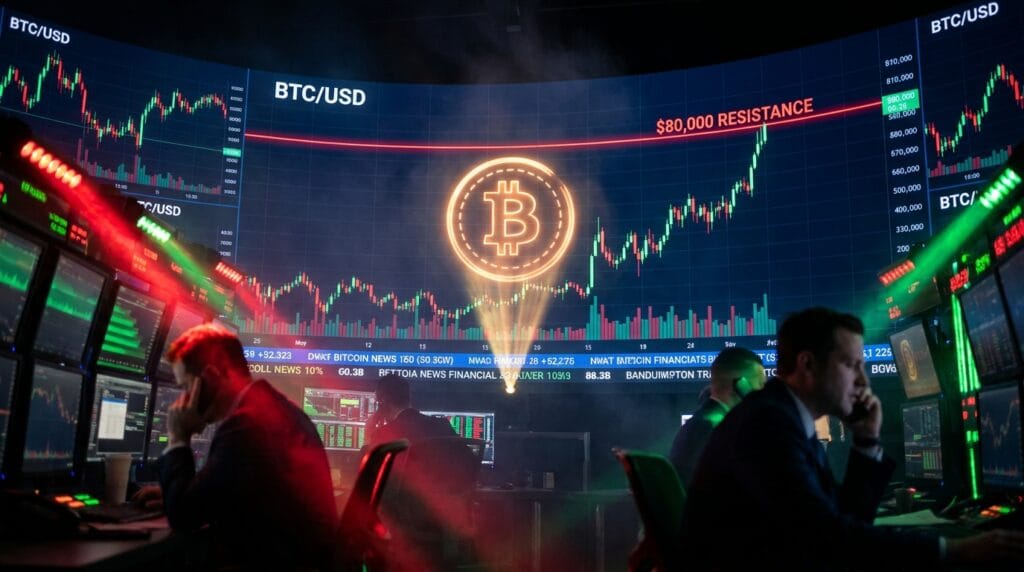
Bitcoin price prediction Bitcoin feels unusually quiet right now. No big headlines. No explosive moves. No panic. Just slow price action… and a market that seems to be waiting. But if you’ve been in crypto long enough, you know this kind of silence doesn’t last. In fact, some of the biggest moves in Bitcoin history have started during moments exactly like this. Bitcoin price prediction Bitcoin market analysis BTC breakout Bitcoin $80K resistance crypto market update So the real question is simple: Is Bitcoin losing momentum… or quietly preparing for something bigger? The Market Feels Calm… Maybe Too Calm Right now, Bitcoin is moving in a tight range, struggling to break above the $80,000 level. Each attempt gets close… and then slows down. Not because the market is weak, but because there’s a balance. Buyers are still active. Sellers are still strong. And when both sides are this evenly matched, price usually goes sideways. This phase is often called consolidation. It may look boring… but it’s actually one of the most important parts of any trend. Why Quiet Markets Can Be Dangerous A quiet market doesn’t mean nothing is happening. It usually means pressure is building. Think of it like this: The longer price stays in a tight range, the stronger the eventual breakout tends to be. That’s because traders are watching the same levels. Orders start stacking. Tension increases. And eventually… the market chooses a direction. When that happens, the move can be fast. Very fast. The $80K Level Everyone Is Watching Right now, one level stands out more than anything else: $80,000. It’s not just a price. It’s psychological. Round numbers always attract attention in financial markets. Traders place orders there. Investors react there. And because of that, resistance becomes stronger. If Bitcoin breaks above $80K with strong momentum, it could trigger a new wave of buying. But if it keeps getting rejected, we might see a short-term pullback first. What’s Happening Behind the Scenes While Bitcoin looks quiet on the surface, there are bigger forces at play. Global financial conditions are shifting. Interest rates remain high. Yields are rising. And that changes how investors think. When safer assets start offering better returns, some money moves away from riskier markets like crypto. Not all at once… but gradually. This doesn’t kill the trend. But it can slow things down. Short-Term vs Long-Term View In the short term, Bitcoin may continue moving sideways. Breakouts are harder. Momentum feels weaker. That part is normal. But long term? Adoption is still growing Institutional interest remains strong Demand continues to build quietly And historically, quiet accumulation phases often come before strong upward moves. So… What Happens Next? There are a few possible scenarios from here: 1. Breakout Above $80K Momentum returns New buyers enter Price accelerates quickly 2. Short-Term Pullback Support gets tested Weak hands exit Stronger base forms 3. Continued Sideways Movement More consolidation More pressure builds Bigger move later None of these are bad. They are just different paths to the same thing: movement. Final Thought Markets don’t stay quiet forever. And Bitcoin is no different. Right now, it may feel slow… But these are often the moments that matter the most. Because when the move finally comes… it rarely gives a warning. So the real question is: Are you just watching the market… or preparing for what comes next?
Bitcoin Stuck Below $80K as U.S. Yields Hit 5%
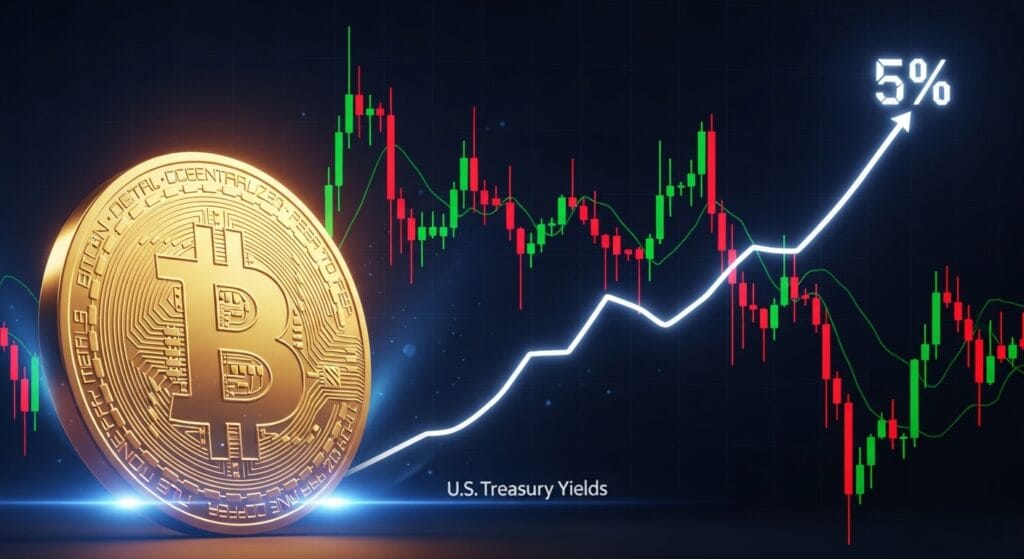
This Bitcoin price analysis shows that something important is happening in the market right now, and a lot of people are quietly watching. The U.S. 30-year Treasury yield has just reached 5%, a level we haven’t seen in quite some time. At the same time, Bitcoin is hovering just below a key resistance zone near $80,000. At first, these might look like two completely different stories. One belongs to traditional finance, the other to crypto. But in reality, they are deeply connected. And when these two worlds start to interact, things can change faster than people expect. This is one of those moments where macroeconomics meets crypto. And history shows that these moments rarely stay quiet for long. Understanding the Link Between Yields and Bitcoin To really understand what’s going on, you have to think like an investor. When Treasury yields rise, investors suddenly have access to safer returns. Government bonds, which are considered low-risk, start offering more attractive yields. That creates a shift in thinking. Instead of chasing high-risk opportunities, some investors begin to ask: “Why take extra risk in crypto when safer assets are paying more?” This question alone can move markets. It doesn’t mean investors are abandoning Bitcoin completely. But even a small shift in capital can slow things down. And that’s where pressure begins. Money flow is everything in markets. When money starts moving from riskier assets to safer ones, momentum weakens. Not instantly, but gradually. That gradual shift is often the early signal before bigger moves. Bitcoin’s Current Position: Strong, But Not Moving Right now, Bitcoin is in an interesting spot. It’s not weak. There’s no clear sign of panic selling. Buyers are still present. But at the same time, it’s not breaking higher either. The price has been moving between roughly $76,000 and $78,000, testing the upper range again and again, but failing to break through the $80,000 level. That $80K level isn’t just another number. It’s psychological. Traders pay attention to round numbers. Orders build up there. Sellers become more aggressive. And because of that, the market slows down right below it. What we’re seeing right now is classic consolidation: Buyers are still stepping in Sellers are defending resistance The price is moving sideways This doesn’t mean the trend is over. In fact, consolidation phases often come before major moves. The Impact of Rising Yields on Market Behavior When yields hit 5%, it sends a strong signal across the entire financial system. It tells investors one simple thing: money is no longer cheap. Liquidity tightens. Risk becomes less attractive. And when that happens, markets change their behavior. Here’s what usually follows: Institutional investors reduce exposure to high-risk assets Retail traders become more cautious Volatility drops for a period of time Notice something important here. None of these automatically mean a crash. Most of the time, it just means the market pauses. A reset phase. A moment where everything slows down before deciding the next direction. Short-Term Pressure vs Long-Term Strength It’s easy to look at rising yields and assume something negative is coming. But markets are rarely that simple. Yes, in the short term, Bitcoin can feel pressure. Breakouts become harder. Momentum weakens. Price action becomes slower and more frustrating. But zoom out a bit, and the picture changes. Bitcoin has gone through stronger macro pressure before. And interestingly, some of its biggest rallies came right after uncertain periods like this. The difference is time horizon. Short-term: Pressure increases Market slows down Sideways movement becomes more likely Long-term: Adoption continues growing Institutional interest remains Large moves still happen Market Sentiment: Quiet but Focused One of the most interesting things right now is the mood of the market. There’s no panic. But there’s also no excitement. It’s quiet. And quiet markets are often misunderstood. People expect chaos. But sometimes, the most important phases are the calm ones. Right now, traders are watching closely. They’re waiting for confirmation. Not rushing. Not overreacting. And that kind of behavior usually means something is building beneath the surface. What Could Happen Next? From here, the market has a few clear paths. If yields continue rising: Bitcoin may remain under pressure The $80K resistance could hold longer Short-term pullbacks become more likely If yields stabilize or decline: Confidence may return Risk assets could gain momentum Bitcoin might finally break resistance And then there’s the scenario most people ignore: Nothing dramatic happens. The market simply continues moving sideways, building energy slowly until a breakout becomes inevitable. A Personal Take Honestly, this doesn’t feel like a panic situation. It feels like a pause. A waiting phase where the market is holding its breath. Bitcoin isn’t collapsing. It’s not pumping either. It’s just… holding its ground. And sometimes, that’s exactly what strong markets do before making a big move. Key Levels to Watch $80,000 → Major resistance level $75,000–$76,000 → Important support zone A clean breakout above $80K could change sentiment very quickly. But if support levels break, we could see a deeper correction before the next move up. Until then, the market remains in a range. Conclusion The rise in U.S. Treasury yields to 5% is not something crypto investors should ignore. It adds pressure, shifts investor behavior, and introduces uncertainty. At the same time, Bitcoin continues to show resilience. It’s holding key levels and maintaining structure. That combination creates a very interesting setup. Not explosive yet… but definitely important. Final Thought Markets don’t always move fast. Sometimes, they pause. And in those quiet moments, the foundation for the next big move is built. So the real question is simple: Is Bitcoin slowing down… or getting ready for something bigger?
Financial Freedom 2026: 5 Steps to Build Digital Wealth
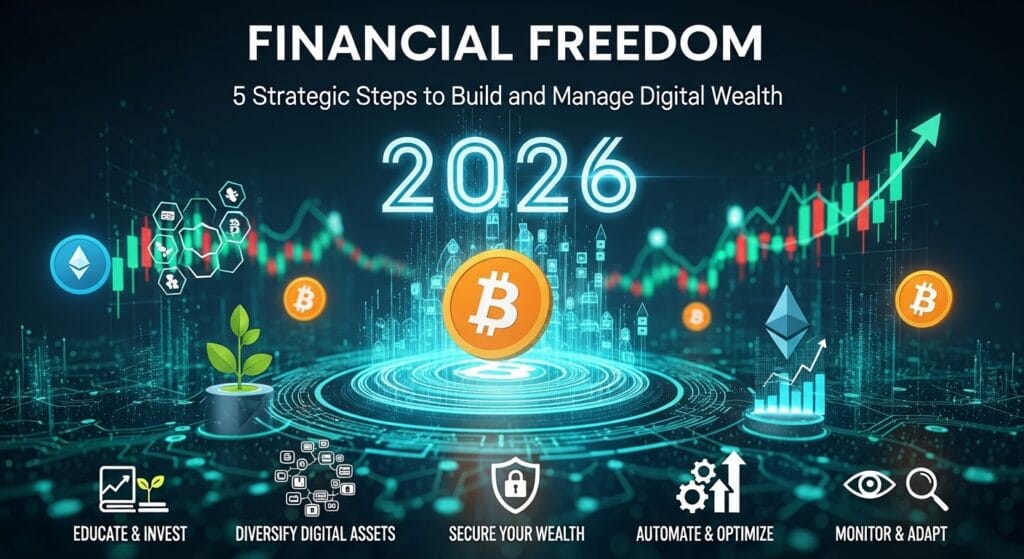
“Achieving financial freedom 2026 is the goal of many as the global economy undergoes a massive shift…” As we move through 2026, traditional paths to wealth—like long-term corporate careers and basic savings accounts—are being replaced by faster, more flexible digital strategies. Today, financial freedom is no longer limited to a small group of people. It has become something anyone can achieve, as long as they understand how the digital world works. However, building wealth today requires more than just earning money. It requires financial clarity. Without a clear plan, even a high income can disappear due to inflation, market changes, or poor decisions. In this guide, we’ll break down five strategic steps that can help you achieve financial freedom in 2026 and secure your future. 1. Establishing a Modern Financial Foundation Before building wealth, you need stability. Just like constructing a building, a strong foundation comes first. Transition to High-Yield Digital Banking In 2026, keeping money in traditional banks often means losing value over time due to inflation. The strategy: Move your savings into modern fintech or digital banking platforms that offer better interest rates and automation tools. The goal: Make sure your money at least keeps up with inflation instead of losing value. The 6-Month Liquid Safety Net The digital economy is unpredictable. Income can fluctuate, especially if you’re freelancing or investing. The rule: Save six months of essential expenses like rent, food, and bills. The storage: Keep it liquid, meaning you can access it within 24 hours without penalties. 2. Diversifying into Emerging Digital Asset Classes One of the biggest rules of building wealth is simple: never rely on one source. Tokenized Real Estate and Commodities You no longer need large capital to invest in real estate or commodities. Blockchain technology now allows you to buy fractional ownership. Why it works: You get the stability of real-world assets combined with the flexibility of digital trading. The Role of Cryptocurrency in 2026 Cryptocurrency has matured and is now considered a real asset class. Core assets: Focus on strong options like Bitcoin (BTC) and Ethereum (ETH). Passive income: Use staking to earn consistent returns from your holdings. Digital Intellectual Property (IP) This is one of the most underrated forms of wealth. A website, YouTube channel, or niche newsletter can grow over time and generate consistent income. 3. Automating Your Path to Wealth Consistency is one of the hardest parts of building wealth. Automation makes it easier. Dollar-Cost Averaging (DCA) This strategy involves investing a fixed amount regularly, no matter the price. The benefit: You reduce risk and smooth out market volatility over time. Most platforms now offer auto-invest features, making this process effortless. AI-Driven Portfolio Rebalancing As your investments grow, your portfolio can become unbalanced. Using AI tools or robo-advisors helps maintain your desired risk level by automatically adjusting your investments. 4. Building the Income-to-Asset Pipeline To achieve financial freedom, you must understand one key difference: income vs assets. Income is temporary. Assets generate long-term value. The Wealth Ratio Many people increase spending as they earn more. This is called lifestyle inflation. The rule: Invest at least 30% of your income into assets. High-Margin Digital Income Digital businesses like affiliate marketing and content creation are powerful because they have low costs. That means more profit can be turned into long-term investments. 5. Security, Protection, and Continuous Education Building wealth is important, but protecting it is just as critical. Multi-Layer Digital Security Never keep all your assets in one place. Use hardware wallets for crypto and secure your accounts with strong authentication methods. The Knowledge ROI Financial systems change quickly. What works today may not work tomorrow. Action: Spend time every week learning about markets, trends, and strategies. The best investment you can make is in your own knowledge. Conclusion: Achieving Financial Clarity Financial freedom in 2026 is not something that happens overnight. It comes from consistent, smart decisions over time. By building a strong foundation, diversifying your assets, automating your investments, and protecting your wealth, you move toward real financial clarity. The opportunities available today are greater than ever before. The only question left is simple: Are you ready to take the first step?
How to Start Affiliate Marketing with $0 in 2026: Top 7 Beginner-Friendly Programs

The digital economy of 2026 has transformed into a landscape where “trust” is the ultimate currency. For many aspiring entrepreneurs, the barrier to entry for starting a business is often financial. However, affiliate marketing remains one of the few legitimate business models where the cost of entry is exactly zero. If you are looking for a way to monetize your digital presence without spending a dime on inventory, shipping, or staff, this guide is your blueprint. We will explore exactly how to start affiliate marketing with $0 and review the top seven programs that are currently dominating the market for beginners. Part 1: The Fundamentals of Affiliate Marketing in 2026 Before we jump into the “where,” we must understand the “how.” Affiliate marketing is a performance-based marketing strategy where a business rewards one or more affiliates for each visitor or customer brought by the affiliate’s own marketing efforts. Why 2026 is the Year of the Affiliate In previous years, big brands spent billions on Facebook and Google ads. However, with increased privacy regulations and “ad-blindness,” companies are now shifting those budgets toward Individual Creators. They would rather pay you a commission for a guaranteed sale than pay a tech giant for a “click” that might not convert. The $0 Entry Strategy Starting with no money means you are trading time and effort for capital. You won’t be using paid advertisements (PPC). Instead, you will be leveraging: Organic Search (SEO): Using platforms like your new website to rank for specific keywords. Social Authority: Using free platforms like TikTok, X (Twitter), and LinkedIn to build an audience. Community Engagement: Helping people in forums like Reddit or specialized Discord servers. Part 2: Step-by-Step Roadmap to Starting with $0 Phase 1: Niche Selection and Research The biggest mistake beginners make is trying to promote everything. If you promote a kitchen blender today and a Cryptocurrency wallet tomorrow, your audience will not trust you. In 2026, the most lucrative niches for beginners include: The Wealth Niche: Cryptocurrency, Personal Finance, and SaaS (Software as a Service). The Health Niche: Biohacking, Mental Wellness, and Home Fitness. The Technology Niche: AI Productivity tools and Remote Work hardware. Phase 2: Building Your “Digital Real Estate” Since you already have a website with 10 high-quality posts, you are ahead of the game. Your website is your “Home Base.” Unlike social media accounts, which can be banned or deleted, you own your domain. To maximize traffic for $0: Focus on Long-Tail Keywords: Instead of trying to rank for “Affiliate Marketing,” try to rank for “Best affiliate marketing programs for students in 2026.” The Pillar-Cluster Model: Write one massive guide (like this one) and then write 5 smaller articles that link back to it. Part 3: In-Depth Review of the Top 7 Beginner-Friendly Programs Here is a detailed breakdown of the programs you should join. These were selected based on their high approval rates for new websites and their reliability in 2026. 1. Amazon Associates: The Ultimate Training Ground Amazon Associates is almost always the first stop for any affiliate. Because Amazon sells almost everything, you can find a product for any niche. Commission Structure: 1% to 10% depending on the category. Cookie Duration: 24 hours. (However, if they add the item to their cart, the cookie extends to 90 days). Why it’s Great for $0 Starts: The “Hale Effect.” If a user clicks your link for a $10 book but ends up buying a $2,000 TV, you get the commission for the whole cart. Strategy for 2026: Focus on “Best [Product] for [Specific User]” articles. For example: “Best Podcasting Microphones for Under $100.” 2. ClickBank: High Margins for Digital Content Commission Structure: 50% to 75%. Cookie Duration: Usually 60 days. Why it’s Great for $0 Starts: You don’t need to wait for physical items to ship. Once the customer pays, your commission is reflected instantly. Strategy for 2026: Look for products with a “Recurring Billing” feature. 3. Impact: The Professional Bridge Commission Structure: Varies by brand. Cookie Duration: Usually 30 days. Why it’s Great: Apply to many brands from one dashboard. 4. Binance & Crypto Exchanges: The Passive Income King Commission Structure: 20% to 50% of trading fees. Cookie Duration: Usually Lifetime. 5. Fiverr Affiliates: Perfect for the “Gig Economy” Commission Structure: $15 to $150 CPA or hybrid. 6. Hostinger: The Foundation of the Web Commission Structure: 60% per sale. 7. Adsterra: Multi-Vertical Monetization Commission Structure: Fixed per lead/install. Part 4: Content Strategies to Drive Traffic for Free The “Vs” Comparison: High conversion searches Problem/Solution Articles: Solve real problems Yearly Reviews: Best tools of 2026 Part 5: Overcoming Common Obstacles The “No Traffic” Trap Repurpose content Guest blogging The “Account Banned” Risk Never click your own links Avoid misleading claims Add disclosure Part 6: Scaling from $0 to $1,000+ per Month Premium SEO Tools Email Marketing Better Design Final Thoughts Starting affiliate marketing with $0 in 2026 is entirely possible, but it requires a “Media House” mindset. You are no longer just a blogger; you are a content curator. By leveraging the 7 programs mentioned above—Amazon, ClickBank, Impact, Binance, Fiverr, Hostinger, and Adsterra—you are diversifying your income across different industries. Success doesn’t come from the first post; it comes from the 50th. Keep providing value, keep optimizing for SEO, and the traffic will follow.
Bitcoin Price Analysis: BTC Consolidates at $77K as Market Eyes $80K Breakout
Is XRP a Good Investment in 2026? Price Prediction, Risks & Beginner Guide
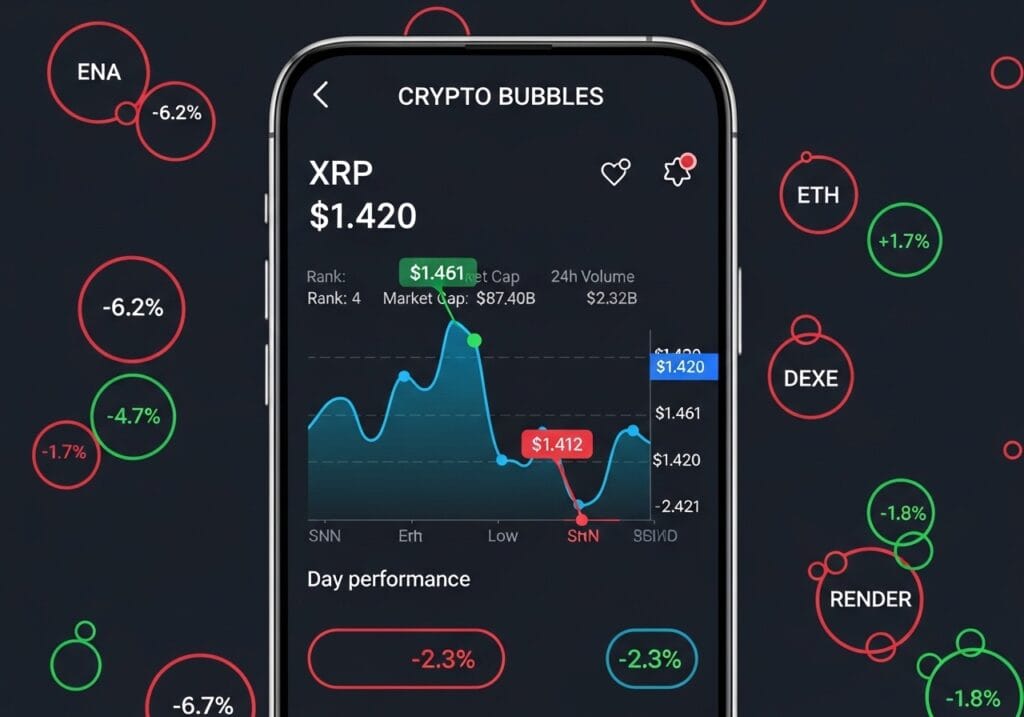
The cryptocurrency market is growing rapidly, and more people than ever are looking for opportunities to invest and build wealth online. Among the many digital assets available today, XRP stands out as one of the most unique and widely discussed cryptocurrencies. But many beginners and even experienced investors are asking important questions: Is XRP a good investment in 2026? Can XRP make you real profit long-term? Should beginners start their crypto journey with XRP? This complete guide is designed to answer all these questions in a simple, clear, and practical way. Whether you are just starting or looking to grow your crypto portfolio, this article will give you real value and help you make smarter decisions. What Is XRP? XRP is a digital currency designed to make global payments faster, cheaper, and more efficient. It was created to solve problems in traditional banking systems, especially when sending money across borders. Unlike Bitcoin, which is mainly used as a store of value, XRP focuses on real-world financial use. It allows banks and financial institutions to transfer money within seconds instead of days, with very low fees. Why XRP Is Different From Other Cryptocurrencies XRP is not just another coin—it has a clear purpose. Key advantages of XRP: Fast transactions (3–5 seconds) Very low fees (almost zero cost) High scalability Real-world financial use Strong global interest Compared to Bitcoin and Ethereum, XRP is more focused on payments and financial systems rather than smart contracts or mining. How XRP Works (Simple Explanation) Let’s make it easy to understand. Traditional banking transfers can take 2–5 days and cost high fees. XRP acts as a bridge between currencies. Example: If someone sends money from the USA to Kenya, XRP can convert USD to XRP and then XRP to Kenyan Shilling instantly. This reduces: Transfer time Transaction cost Complexity This is why XRP is considered a powerful tool for global payments. XRP Market Overview (Current Situation) Looking at today’s market, XRP shows: Stable long-term growth Short-term price fluctuations Strong trading activity Continuous investor interest Like all cryptocurrencies, XRP is affected by: Bitcoin price movements Global financial news Market sentiment Government regulations Important:A price drop does not always mean a bad investment. Sometimes it creates opportunity. Why Many Investors Are Interested in XRP Today 1. Real Utility XRP is used for real financial transactions, not just speculation. 2. Growing Adoption Financial institutions are exploring blockchain technology more than ever. 3. Strong Community XRP has one of the largest and most loyal communities in crypto. 4. Long-Term Potential If global adoption increases, XRP demand may rise significantly. XRP Price Prediction 2026 Let’s break it down realistically. Bear Case:$1 – $2 Base Case:$3 – $5 Bull Case:$7 – $10+ Reaching $10 is possible, but it depends on market growth, adoption, and regulations. Important:Crypto prices are never guaranteed. Always invest carefully. Is XRP a Good Investment for Beginners? Yes, XRP can be a good choice for beginners—but only with the right mindset. Why beginners choose XRP: Affordable price Easy to understand use case Strong market presence High liquidity However, beginners must remember: Crypto is risky.Prices can go up and down quickly. Smart Investment Strategy for XRP If you want to invest wisely, follow this strategy: 1. Start Small Do not invest large amounts at once. 2. Use Dollar-Cost Averaging (DCA) Buy XRP regularly in small amounts instead of one big investment. 3. Think Long-Term Hold your investment for at least 1–3 years. 4. Avoid Emotions Do not panic when prices drop. 5. Take Profits Wisely Do not wait forever—secure profits when needed. Common Mistakes to Avoid Many beginners lose money because of simple mistakes: Buying during hype Selling during panic Not doing research Following fake advice online Investing money they cannot afford to lose Avoid these mistakes to increase your chances of success. How to Start Investing in XRP (Step-by-Step Guide) Step 1: Choose a reliable crypto exchange Step 2: Create and verify your account Step 3: Deposit funds (bank, mobile money, or card) Step 4: Buy XRP Step 5: Store your XRP safely Tip:Use a secure wallet for long-term holding. Best Time to Buy XRP There is no perfect time, but smart investors look for: Market dips Price corrections Fear in the market Rule:Buy when others are afraid, sell when others are greedy. Risks of Investing in XRP Every investment has risks. Main risks include: Market volatility Regulatory changes Competition from other coins Short-term price manipulation Important:Never invest all your money in one asset. XRP vs Other Cryptocurrencies XRP vs Bitcoin:Bitcoin is store of value, XRP is for payments. XRP vs Ethereum:Ethereum supports smart contracts, XRP focuses on fast transactions. Each has its own strength. Future of XRP The future of XRP depends on: Global adoption Financial partnerships Regulation clarity Technology development If these factors improve, XRP could grow significantly. Frequently Asked Questions (FAQ) 1. Is XRP safe to invest in?XRP is relatively established, but like all crypto, it carries risk. 2. Can XRP make you rich?It is possible, but not guaranteed. Smart investing is required. 3. How much should I invest?Only invest what you can afford to lose. 4. Is XRP good for long-term?Yes, many investors see it as a long-term project. 5. Can beginners start with XRP?Yes, it is one of the easier cryptocurrencies to understand. Final Thoughts XRP is one of the most practical cryptocurrencies in the market. It focuses on solving real-world problems, especially in global payments. Is XRP worth investing in today?Yes—if you invest wisely and understand the risks. Can XRP reach high prices in the future?It is possible—but depends on market conditions and adoption. Conclusion XRP is fast, cheap, and useful It has strong long-term potential Beginners can start with it Smart strategy is key to success SEO Keywords XRP price prediction 2026, is XRP a good investment, how to invest in XRP, crypto for beginners, XRP future, buy XRP guide, cryptocurrency investment tips
Ethereum Investment Guide 2026: Best Time to Buy ETH for Maximum Profit
. The Ethereum Investment Guide 2026: Best Time to Buy ETH for Maximum Profit is designed to help both beginners and experienced investors understand when and how to invest in Ethereum effectively. As one of the leading cryptocurrencies, Ethereum continues to play a major role in the digital economy. Knowing the best time to buy ETH can significantly impact your potential returns.This guide explains market trends, strategies, risks, and key factors that influence Ethereum’s price, all in a clear and practical way. . What Is Ethereum and Why It Matters Ethereum is a decentralized blockchain platform that enables smart contracts and decentralized applications (dApps). Unlike Bitcoin, which is mainly used as a store of value, Ethereum powers a wide range of applications including decentralized finance (DeFi), NFTs, and blockchain-based services.Ether (ETH) is the native cryptocurrency of the Ethereum network. It is used to pay transaction fees and interact with applications on the blockchain.Ethereum’s importance continues to grow due to:Strong developer ecosystemWide adoption in DeFi and NFTsContinuous upgrades improving scalability and efficiencyIncreasing institutional interestThese factors make ETH one of the most attractive digital assets for long-term investment. . Understanding Ethereum Price Movements To follow the Ethereum Investment Guide 2026: Best Time to Buy ETH for Maximum Profit, you need to understand what drives ETH prices. . 1. Supply and Demand Like any asset, ETH price depends on supply and demand. When more people want to buy Ethereum than sell it, the price goes up.Ethereum’s supply has become more controlled due to upgrades that burn transaction fees, reducing overall circulation. . 2. Market Sentiment Crypto markets are highly influenced by investor emotions. News, social media, and global events can quickly push prices up or down.Bullish sentiment leads to price increases, while fear and uncertainty cause declines 3. Network Activity Higher usage of Ethereum (more transactions, DeFi activity, NFT trading) increases demand for ETH, which can drive prices higher. . 4. Macroeconomic Factors Global interest rates, inflation, and economic conditions also affect crypto markets. When traditional markets struggle, investors often turn to crypto as an alternative. . Best Time to Buy ETH for Maximum Profit Timing is critical in crypto investing. While no one can predict the market perfectly, there are proven strategies to identify good entry points. . Buy During Market Corrections . One of the best times to buy ETH is during a market correction. This is when prices drop after a strong upward trend.Corrections are normal and often provide opportunities to buy at lower prices before the next rise. . Accumulate in Bear Markets Bear markets are periods when prices remain low for an extended time. While they may seem discouraging, they are often the best time to accumulate assets like ETH.Many successful investors build positions during bear markets and profit during bull runs. . Use Dollar-Cost Averaging (DCA) Instead of trying to time the market perfectly, you can invest a fixed amount regularly. This strategy reduces risk and smooths out price volatility.For example:Buy ETH weekly or monthlyAvoid emotional decisionsBuild a long-term position gradually . Watch Key Support Levels Technical analysis can help identify price levels where ETH tends to stabilize (support levels). Buying near these levels can reduce downside risk. . Ethereum Market Cycles Understanding market cycles is essential in the Ethereum Investment Guide 2026: Best Time to Buy ETH for Maximum Profit. Crypto markets typically move in four phases:Accumulation Phase – Prices are low, smart investors start buyingUptrend (Bull Market) – Prices rise rapidlyDistribution Phase – Early investors begin sellingDowntrend (Bear Market) – Prices declineThe best time to buy ETH is usually during the accumulation phase or early in the uptrend. . Key Indicators to Watch Before Buying ETH Relative Strength Index (RSI)RSI measures whether ETH is overbought or oversold.RSI below 30 → Oversold (potential buying opportunity)RSI above 70 → Overbought (potential correction ahead)2. Moving AveragesMoving averages help identify trends.Price above moving average → UptrendPrice below moving average → Downtrend3. Trading VolumeHigh trading volume during price increases indicates strong momentum. Low volume may signal weak trends . Short-Term vs Long-Term Investment Short-term traders aim to profit from price fluctuations.Pros:Quick gainsMore trading opportunitiesCons:Higher riskRequires constant monitoring Long-Term Holding (HODL) Long-term investors hold ETH for years. Pros:Less stressHigher potential returns over timeCons:Requires patienceMarket volatility can be challengingFor most people, long-term investing is safer and more effective. . Ethereum in 2026: What to Expect Ethereum continues to evolve, and its future looks promising.Increased AdoptionMore businesses and developers are building on Ethereum, increasing demand for ETH.Layer 2 Scaling SolutionsTechnologies that improve speed and reduce fees are making Ethereum more efficient.Institutional InvestmentLarge companies and financial institutions are investing in Ethereum, adding credibility and stability. Regulatory Clarity Governments are creating clearer rules for crypto, which can attract more investors. . Risks to Consider No investment is risk-free. The Ethereum Investment Guide 2026: Best Time to Buy ETH for Maximum Profit must also highlight potential risks.Market VolatilityCrypto prices can change rapidly. Large gains are possible, but so are losses.Regulatory ChangesNew laws could impact how Ethereum is used or traded.CompetitionOther blockchains may compete with Ethereum, affecting its dominance.Security RisksHacks, scams, and wallet vulnerabilities remain concerns in the crypto space. Diversify Your PortfolioDo not invest all your money in ETH. Spread investments across different assets to reduce risk.Set Clear GoalsDecide whether you are investing for short-term profit or long-term growth.Use Secure WalletsStore ETH in trusted wallets to protect your assets.Avoid Emotional TradingFear and greed often lead to poor decisions. Stick to your strategy. . Common Mistakes to AvoidBuying during hype without researchSelling during panic dipsIgnoring market trendsInvesting more than you can afford to loseTrying to time the market perfectlyAvoiding these mistakes can improve your chances of success.Step-by-Step Guide to Buying ETHChoose a reliable crypto exchangeCreate and verify your accountDeposit fundsBuy ETH at your preferred priceTransfer to a secure walletIs 2026 a Good Time to Invest in Ethereum?The answer depends on market conditions, but Ethereum remains one of the strongest crypt o assets. Its continuous development and widespread use make it a solid long-term investment.If you follow
