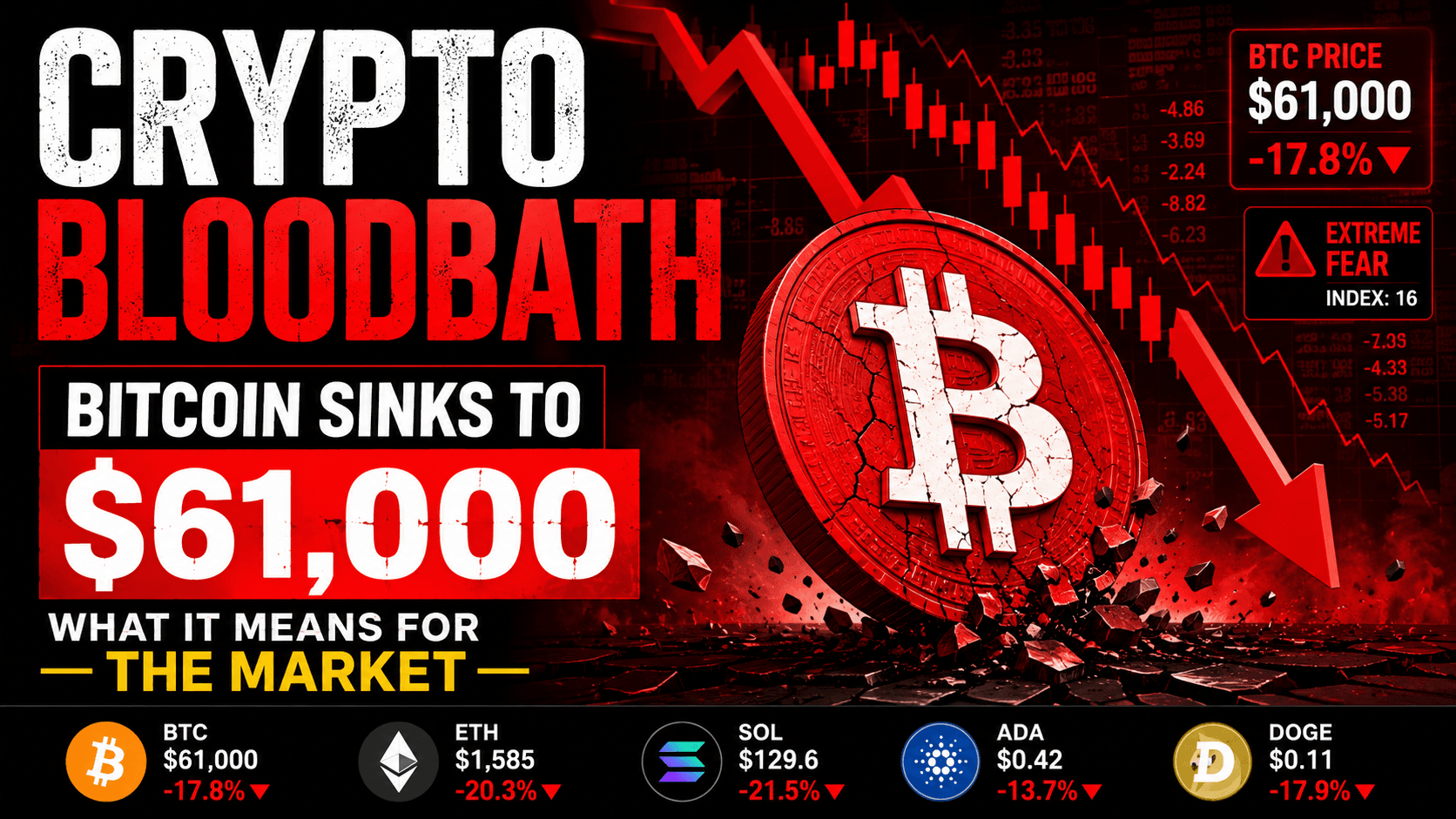

The global cryptocurrency market capitalization currently stands at $2.43 trillion, signaling a fundamental paradigm shift in the architecture of global finance. No longer a playground for isolated retail speculation, the digital asset sector has matured into an institutional-grade asset class driven by macroeconomic liquidity, global regulatory frameworks, and enterprise-level adoption.
This comprehensive article explores the structural breakdown of the current crypto market cap, the balance of power between Bitcoin and alternative digital assets, the core mechanisms driving liquidity, and the strategic projections for this financial ecosystem heading toward the next decade.
1. Dissecting the Current Ecosystem: Dominance and Allocations
The distribution of capital within the digital asset market reflects a structured hierarchy. Established blueprint assets provide relative stability, while emerging networks offer high-velocity growth potential.
Capital Allocation Across the Sector
- Total Market Capitalization: Currently stabilizing at $2.43 trillion following a period of macro consolidation.
- Bitcoin Dominance (BTC.D): Bitcoin continues to anchor the market, capturing between 56% and 59% of the total market share, commanding a valuation of approximately $1.36 trillion.
- Ethereum’s Market Share: Ethereum remains the secondary pillar of the ecosystem, maintaining roughly 10% market dominance with a market cap fluctuating around $281 billion.
- Stablecoin Liquidity Reserves: Stablecoins (primarily USDT and USDC) command approximately $316 billion, accounting for roughly 13% of the total market cap. This represents ready-to-deploy sidelined capital.
+-------------------------------------------------------------+

|               Digital Asset Market Dominance Breakdown      |
+-------------------------------------------------------------+

| [██████████████████████████████ 56-59%] Bitcoin (BTC)       |
| [█████ 10%] Ethereum (ETH)                                  |
| [████ 13%] Stablecoins (USDT/USDC)                          |
| [██████ 18-21%] Alternative Assets (Altcoins)               |
+-------------------------------------------------------------+
2. Methodology: Understanding “Market Cap” in Web3
Evaluating market capitalization in cryptocurrencies requires a different analytical lens than traditional equities. The baseline formula remains identical:
$$\text{Market Capitalization} = \text{Current Price} \times \text{Circulating Supply}$$
However, institutional analysts divide this metric into two critical dimensions to assess true underlying value:
Circulating Market Cap vs. Fully Diluted Valuation (FDV)
- Circulating Market Capitalization: This includes only the coins actively minted and trading in the open market. It serves as the most accurate gauge for immediate supply-and-demand dynamics.
- Fully Diluted Valuation (FDV): This represents the market cap if the entire maximum supply of the token were unlocked and circulating at the current price.
- The FDV Gap: A massive divergence between Circulating Market Cap and FDV signals future inflationary pressure. If vast tranches of locked tokens are scheduled to hit the market via vesting schedules, the asset’s price will face downward pressure unless demand scales proportionally.
3. Categorization by Market Capitalization Tiers
Much like the division of micro, mid, and large-cap stocks in traditional equity markets (e.g., S&P 500 or NASDAQ), the crypto ecosystem is categorized into distinct tiers that dictate risk and reward profiles:
Large-Cap Digital Assets (>$10 Billion)
Anchored primarily by Bitcoin (BTC), Ethereum (ETH), and core infrastructure networks such as Solana (SOL) and BNB.
- Attributes: High liquidity pools, institutional order book depth, and lower volatility margins.
- Strategic Role: Serves as the foundational layer and a relative safe haven for institutional capital allocators.
Mid-Cap Digital Assets ($1 Billion – $10 Billion)
Consists of emerging Layer-1 blockchains, cross-chain interoperability protocols, and dominant decentralized finance (DeFi) applications.
- Attributes: Moderate-to-high volatility, substantial growth horizons, and developing institutional interest.
- Strategic Role: The primary engine for technological breakthroughs and application-layer innovation.
Small-Cap Digital Assets (<$1 Billion)
Encompasses early-stage application tokens, specialized niche infrastructure, and culture-driven memecoins.
- Attributes: Thin order book depth, extreme price swings, and susceptibility to severe slippage or project abandonment.
- Strategic Role: High-risk, speculative vehicles utilized for aggressive capital maximization.
4. Structural Catalysts Driving Capital Inflows
The modern expansion of the crypto market cap is no longer dictated by viral social media trends. Instead, it is sustained by four institutional macro drivers:
1. Institutional Inflows via Spot Exchange-Traded Funds (ETFs)
The regulatory approval and integration of spot Bitcoin and Ethereum ETFs marked a watershed moment. Managed by asset management giants like BlackRock and Fidelity, these funds purchase and hold the underlying spot assets. This mechanism locks up significant portions of the circulating supply, shifting the market structure from speculative trading to structural accumulation.
2. The Expansion of Digital Dollar Reserves (Stablecoins)
Stablecoins act as the primary liquidity gauge for the decentralized web. A rising stablecoin market cap indicates that fiat currency is entering the crypto ecosystem, building up purchasing power. Historically, a sustained increase in USDT and USDC supply serves as a reliable leading indicator for a broader market expansion.
3. Real-World Asset Tokenization (RWA)
The financial sector is actively moving traditional assets—such as U.S. Treasury bills, corporate debt, and real estate—onto public and private blockchains. This process of tokenization brings trillions of dollars of legacy financial utility onto blockchain networks, fundamentally expanding the total addressable market of the crypto cap.
4. Macroeconomics and Global Liquidity Cycles
Digital assets exhibit high sensitivity to the global money supply ($M2$) and central bank policies. When major central banks enter a monetary easing cycle or lower benchmark interest rates, excess capital naturally flows toward risk-on assets. Cryptocurrencies have proven to be highly efficient beneficiaries of these global liquidity expansions.
5. Comparative Valuation: Crypto vs. Legacy Asset Classes
To put the $2.43 trillion digital asset ecosystem into perspective, it is highly useful to evaluate its scale against the world’s most prominent traditional assets and corporations:
| Asset / Financial Entity | Approximate Market Capitalization (Trillion USD) | Asset Structural Nature |
|---|---|---|
| Physical Gold | ~ $17.5 | Sovereign physical commodity; historical global store of value. |
| Microsoft Corporation | ~ $3.2 | Global technology infrastructure giant; centralized corporate equity. |
| Total Cryptocurrency Market | $2.43 | Global decentralized economic ecosystem spanning thousands of protocols. [1] |
| Bitcoin (BTC) | $1.36 | Decentralized, mathematically finite network; acting as digital gold. |
| Meta Platforms | ~ $1.25 | Global social technology and media conglomerate.https://crypto.com/en/glossary/market-cap |
This comparison highlights that the entire cryptocurrency asset class is roughly valued on par with a single mega-cap U.S. technology company. This reveals that despite its massive growth, the asset class remains in its early-to-mid phases of global adoption when measured against multi-trillion-dollar legacy commodities like gold.
6. Analytical Pitfalls of Relying Solely on Market Cap
While market capitalization is a vital baseline metric, using it in isolation can lead to flawed investment conclusions due to specific technical realities:
The Illusion of “Paper Valuation” and Order Book Liquidity
A market capitalization of $1 billion for an exotic altcoin does not mean $1 billion in cash has entered the project. If a developer mints 1 billion tokens and sells exactly one token to a buyer for $1, the theoretical market cap instantly registers as $1 billion.
True value is determined by liquidity depth—the volume of buy and sell orders resting on order books. If an asset has a high market cap but thin liquidity, any significant selling pressure will cause the valuation to collapse rapidly.
Lost, Burned, and Dormant Supply
Standard market cap metrics assume that every minted coin in circulation is active. In reality, independent blockchain audits estimate that between 11% and 18% of all existing Bitcoin is permanently inaccessible due to lost private keys, hardware destruction, or early inactive wallets. This dormant supply artificially inflates the active market cap, masking the true amount of liquid supply available on exchanges.
7. Future Horizons: Strategic Projections Toward 2030
Analytical research from global banking institutions, including Standard Chartered and Coinbase Research, indicates that the crypto ecosystem is undergoing a transition from retail-driven hype to utility-driven valuation.
Core Trends Defining the Next Phase
- Regulatory Standardization: Frameworks like Europe’s MiCA (Markets in Crypto-Assets) are providing operational guardrails. This clarity allows global commercial banks to safely custody assets and settle cross-border transactions using public ledger architectures.
- The Multi-Trillion Target: Long-term institutional models suggest that as Layer-2 scaling networks mature and spot ETFs integrate into standard retirement portfolios, the total market cap is well-positioned to cross the $5 trillion threshold by the turn of the decade.
- Decoupling of Altcoins: Moving forward, alternative digital assets will increasingly break away from moving in perfect synchronization with Bitcoin. They will instead be valued on their individual economic merits: net fee generation, network throughput, active developer retention, and real-world application volume.
Conclusion for Allocators
A global market capitalization of $2.43 trillion demonstrates that digital assets have successfully transitioned from an experimental concept into a permanent pillar of modern global finance. However, sophisticated market participants must look beyond simple market cap rankings. $2.43 trillion,
To accurately evaluate assets, market cap must be cross-referenced with daily trading volume, token unlock schedules, and decentralized exchange liquidity depth. Understanding these structural dynamics is the ultimate differentiator between speculative risk and systematic wealth preservation in the digital asset age.
To tailor the next analytical phase to your exact requirements, select one of the following paths: $2.43 trillion,
- Shall we break down the tokenomics and vesting structures used to analyze mid-cap projects?
- Would you prefer an analysis of order book liquidity depth vs. market cap for top-tier assets?
- Do you want to examine how Layer-2 scaling solutions are capturing economic value from Layer-1 networks?https://khaldir.com/2026/06/01/crypto-market-outlook-2026-institutional-ad/
SEO Keywords
- crypto market cap
- cryptocurrency mark $2.43 trillion,et analysis
- Bitcoin dominance
- Ethereum market share
- stablecoin liquidity $2.43 trillion,
- crypto investment strategy
- blockchain economy
- digital assets
- Web3 finance
- Bitcoin ETF
- Ethereum ETF
- tokenomics
- crypto regulation
- real world asset tokenization
- crypto market forecast
- decentralized finance
- crypto trends 2026
- institutional crypto adoption
- blockchain technology
- crypto market growth