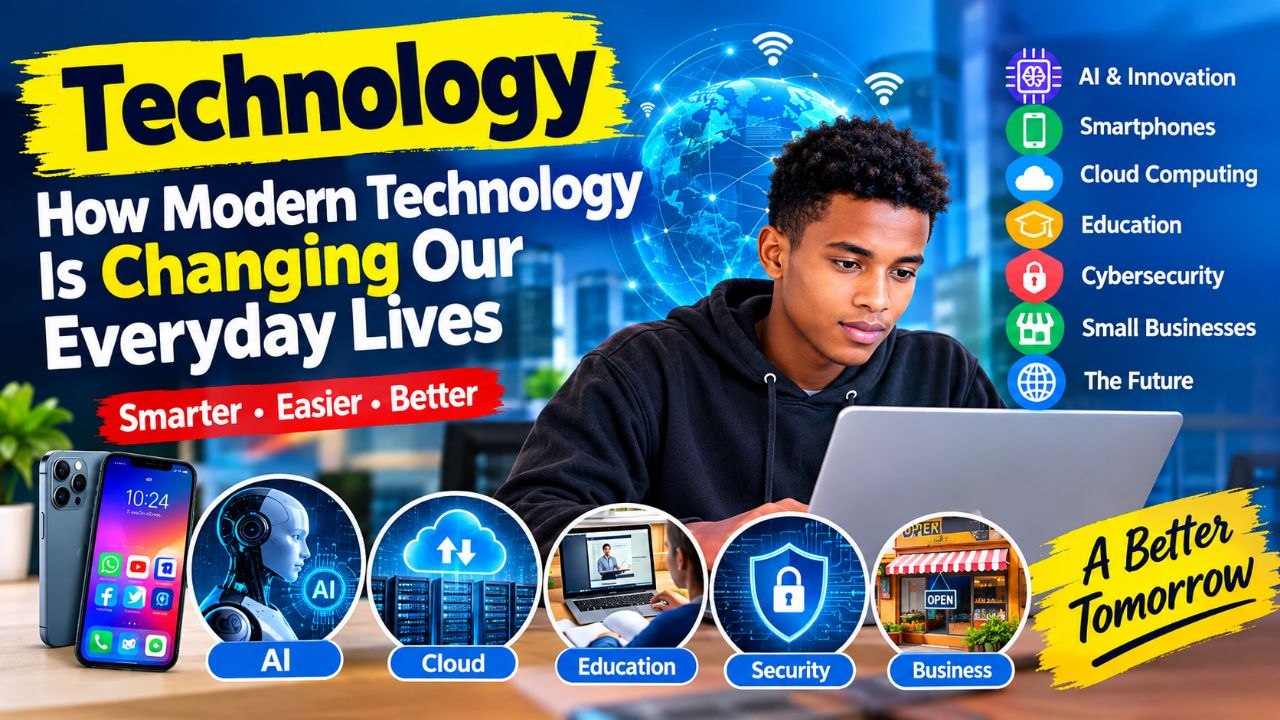
Technology has become an important part of modern life. From smartphones and computers to artificial intelligence, cloud services, and digital communication, technology continues to change the way people work, learn, communicate, and solve everyday problems. What was considered advanced technology a few decades ago is now commonly used by millions of people around the world.
The development of technology has created new opportunities for individuals, businesses, students, and organizations. At the same time, it has introduced new responsibilities related to privacy, security, and the responsible use of digital tools. Understanding these changes can help people make better decisions when using technology.
The Importance of Technology in Daily Life
Many everyday activities now depend on digital technology. People use smartphones to communicate with family and friends, access information, manage appointments, take photographs, navigate unfamiliar places, and use online services.
Computers and tablets are also widely used in education and professional environments. Students can access educational materials online, while employees can communicate and collaborate with colleagues from different locations.
Technology has made many services more convenient. Online banking, digital payments, online shopping, video conferencing, and electronic government services allow people to complete tasks without always needing to visit a physical location.
However, convenience should always be balanced with awareness. Users should understand how their information is collected, stored, and shared when using digital services.
Artificial Intelligence and Modern Technology
Artificial intelligence, commonly known as AI, is one of the most important developments in modern technology. AI systems can analyze large amounts of information, identify patterns, generate content, translate languages, and assist people with different tasks.
AI is being used in many industries. Businesses can use it to analyze data and improve customer support. Educational platforms can use AI to provide personalized learning experiences. Developers can use AI-assisted tools to help write and review software.
Despite its benefits, AI should be used responsibly. Information generated by AI may contain errors, so important information should be checked against reliable sources. People should also avoid sharing sensitive personal information with unfamiliar AI services.
The future of AI will likely involve greater cooperation between humans and intelligent software. Instead of replacing every human task, many AI tools are designed to help people work more efficiently and make better-informed decisions.
Smartphones and Mobile Technology
Smartphones have transformed communication and access to information. A modern smartphone can function as a camera, navigation device, communication tool, entertainment system, and personal productivity assistant.
Mobile applications allow users to access services from almost anywhere with an internet connection. Social media, educational applications, financial services, productivity tools, and communication platforms are all available through mobile devices.
Smartphones also provide opportunities for small businesses and independent creators. A person can record a video, edit it, publish it online, and communicate with an audience using a single device.
However, excessive smartphone use can affect productivity and concentration. Creating healthy digital habits, managing notifications, and taking regular breaks can help users maintain a better balance.
Cloud Computing and Online Services
Cloud computing has changed how people and businesses store and access information. Instead of keeping all files on a single computer, users can store data on remote servers and access it through the internet.
Cloud services are commonly used for file storage, website hosting, online applications, collaboration, and business operations. They can make it easier for teams to work together even when members are located in different cities or countries.
Cloud technology can also reduce the need for organizations to maintain large amounts of physical hardware. However, users should still consider security, backups, account protection, and the reliability of their service provider.
Using strong passwords and enabling two-factor authentication are important steps for protecting cloud-based accounts.
Technology and Education
Technology has created new ways for people to learn. Online courses, digital libraries, educational videos, interactive applications, and virtual classrooms give students access to educational resources beyond traditional classrooms.
Students can learn at their own pace and explore subjects that may not be available locally. Teachers can also use digital tools to prepare lessons, communicate with students, and provide learning materials.
Nevertheless, technology should support education rather than replace critical thinking. Students need to evaluate information carefully because not everything published online is accurate.
Learning how to identify trustworthy sources is now an important digital skill.
Cybersecurity and Online Privacy
As technology becomes more important, cybersecurity becomes increasingly important as well. Cybersecurity refers to the practices used to protect devices, accounts, networks, and information from unauthorized access.
Simple security practices can make a significant difference. Users should create strong and unique passwords, enable two-factor authentication when available, keep software updated, and avoid clicking suspicious links.
People should also be careful when receiving unexpected emails or messages requesting passwords, verification codes, or financial information. Scammers may attempt to create a sense of urgency to convince users to reveal private information.
Privacy is another important part of digital life. Before installing an application, users should review the permissions it requests and understand why those permissions may be necessary.
Technology and Small Businesses
Technology has made it easier for small businesses to reach customers. Websites, social media platforms, digital advertising, online payment systems, and communication tools allow businesses to operate and market their services online.
A small business can create a professional website, publish useful information, communicate with customers, and manage basic operations using affordable digital tools.
Technology can also help businesses analyze customer behavior and improve their services. However, businesses should use customer information responsibly and follow applicable privacy and data protection requirements.
The Future of Technology
Technology will continue to develop as researchers, developers, and businesses create new solutions. Areas such as artificial intelligence, robotics, renewable energy technology, cybersecurity, cloud computing, and connected devices are likely to remain important.
The future will not only depend on creating new technologies. It will also depend on how responsibly those technologies are designed and used.
Digital literacy will become increasingly valuable. People who understand basic technology, online security, privacy, and information verification will be better prepared to take advantage of new opportunities while reducing potential risks.
Conclusion
Technology has changed nearly every part of modern life. It has improved communication, created new educational opportunities, supported businesses, and made many everyday services more accessible.
At the same time, technology requires responsible use. Protecting personal information, maintaining strong account security, checking online information, and developing healthy digital habits are essential skills.